Oh no, “Agile is Dead”! Again.
I've been trying to avoid joining the "Is Agile dead?" conversation that pops up repeatedly, as it has once again on LinkedIn in recent months. It's tempting to get caught up in this debate, but it happens so frequently. Let's be honest—whenever there's a major change or new initiative in a...

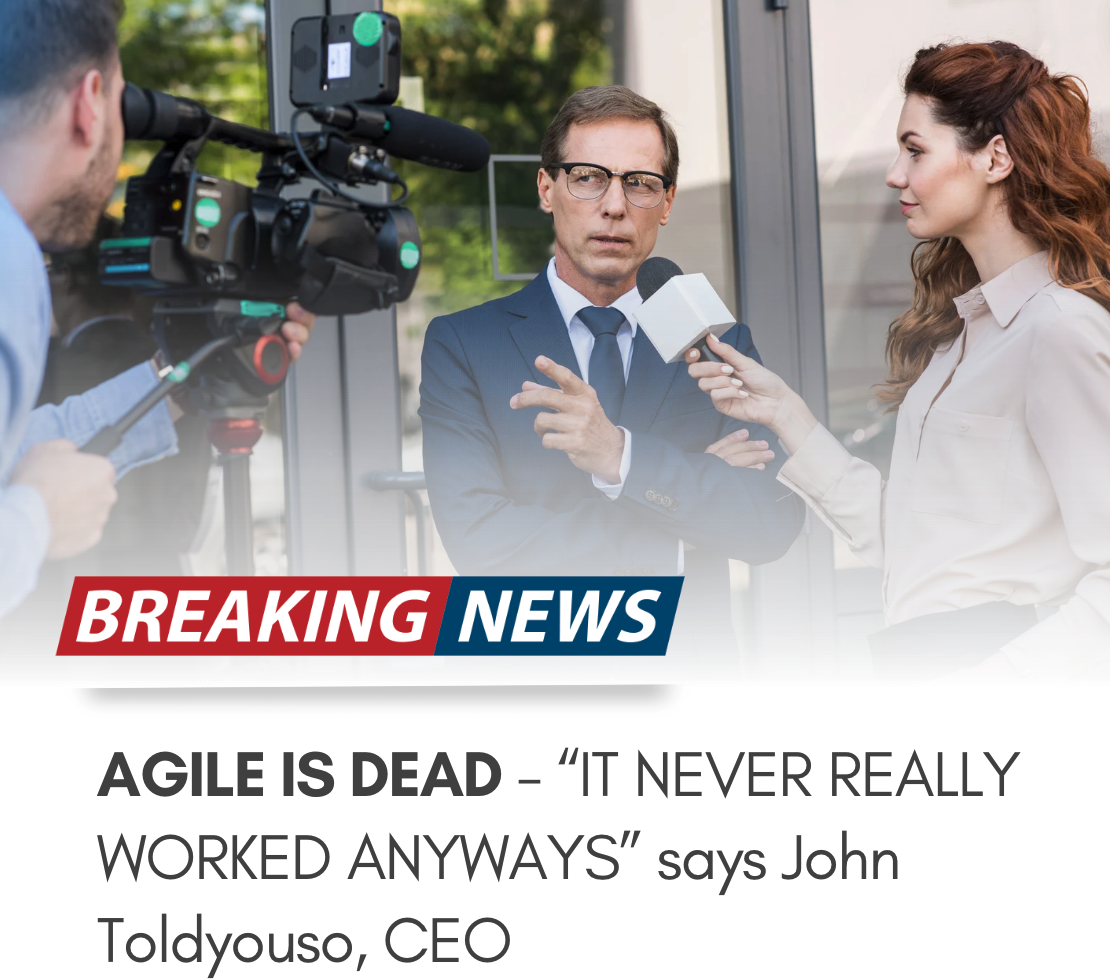
I've been trying to avoid joining the "Is Agile dead?" conversation that pops up repeatedly, as it has once again on LinkedIn in recent months. It's tempting to get caught up in this debate, but it happens so frequently. Let's be honest—whenever there's a major change or new initiative in a company, someone inevitably questions, "What about Agile? Maybe it's not so great after all!"
When the rhetorics does rear its head, exasperatingly incomprehensible as it may be, I always refer people to my controversial “Agile Isn’t “Out”, You are!” Forbes article of years ago as it says it all, nothing changed and the backlash I get for it is the same no matter when it comes back around again.
Why does it? Because no one wants to hear it, as I postulated many times before, “Agile Isn’t Business, It’s Personal” - in that genuine capacity for agility is a state of mind and it is not as common as we want to believe. Having spent years studying agility and its psychological tenets as a self-professed “Agile anthropologist” I know it requires a combination of extreme grit, mental flexibility, resilience, intelligence, passion and a dash of perfectionism (debatable as the use of that is) and that it can never be done “by numbers” and without having genuinely embraced it at a deep personal level.
“It all hinges upon our EQ. What does emotional intelligence have to do with it? I've often written about this in the past, Agile is a "Way of Thinking not a Way of Working".
Being Agile creates mental pressure to the practitioner. The old ways of work have served the employee for years, changing anything is intensely risky and most of us are risk averse when it comes to our professional lives. At the same time, anyone who looks under the hood understands that Agile speeds things up but may expose limitations as it needs the practitioner to eternally be alert, always question their progress, never stop pushing themselves and others and always strive for new and better. Excellence is not comfortable or easy to attain and all that Agile does is enable excellence.